- Biotech Snap
- Posts
- Mirum's $620M acquisition of Bluejay & BioNTech’s CTLA-4 safety trade-offs
Mirum's $620M acquisition of Bluejay & BioNTech’s CTLA-4 safety trade-offs

Joachim Eeckhout
December 09, 2025


👉 Download the free eBook and learn how to streamline advanced fluid and cold chain management for small volumes
Good morning! If you thought the obesity drug race couldn’t get any louder, today brought a fresh round of “data drops + stock pops”: Wave Life Sciences and Structure Therapeutics both saw shares roughly double after they disclosed new readouts aimed at carving space in a field still dominated by Novo Nordisk and Eli Lilly. Wave’s interim Phase 1 snapshot for its siRNA candidate WVE-007 highlighted a 9.4% reduction in visceral fat at three months after a single dose, while reporting a 3.2% increase in lean mass, a potential differentiator versus GLP-1–associated muscle loss. Structure, meanwhile, posted Phase 2b results for its once-daily oral GLP-1 aleniglipron, reporting 11.3% placebo-adjusted weight loss at 36 weeks at the 120 mg dose and saying it’s gearing up for Phase 3. And because it was apparently “obesity data Monday,” Ascletis also chimed in with 7.7% weight loss in Phase 2 results for its oral GLP-1 candidate ASC30. That’s more % than what you get for Black Friday.
Enjoy today’s read!
—Joachim E.
Don’t keep this newsletter a secret: Forward Biotech Snap to a friend!
Was this email forwarded to you? Sign up here.
SNAPSHOT
Mirum brings home Bluejay for $620M to obtain its hepatitis candidate

Mirum Pharmaceuticals is acquiring Bluejay Therapeutics for $620 million in cash and stock to obtain brelovitug, a promising phase 3 hepatitis D drug.
Why it matters: If successful, brelovitug could redefine treatment for hepatitis D, a rare but serious liver disease, offering new hope to underserved patients.
Backstory: Bluejay’s brelovitug, a monoclonal antibody, showed a 100% response rate in a recent phase 2 trial. The drug targets both hepatitis D and B viruses and is currently in a phase 3 trial expected to read out in late 2026.
Big picture: This acquisition expands Mirum’s rare liver disease pipeline and strengthens its position in the competitive immunotherapy space, adding to its portfolio of niche, high-impact treatments.
Zoom in: Mirum is paying $250M in cash + $370M in its own stocks to Bluejay’s shareholders, with potential for $200M more in sales milestones. Mirum also secured $200M through a private stock placement to fund development and commercialization.
What's next: Brelovitug will join Mirum's pipeline alongside Livmarli (for Alagille syndrome) and volixibat (cholangitis) and make use of Mirum´s already strong contacts from other liver programs. A potential FDA submission and launch for brelovitug is expected in 2027.
PRESENTED BY SINGLE USE SUPPORT
Why filling & freezing of ATMPs matter (and how teams de-risk it)
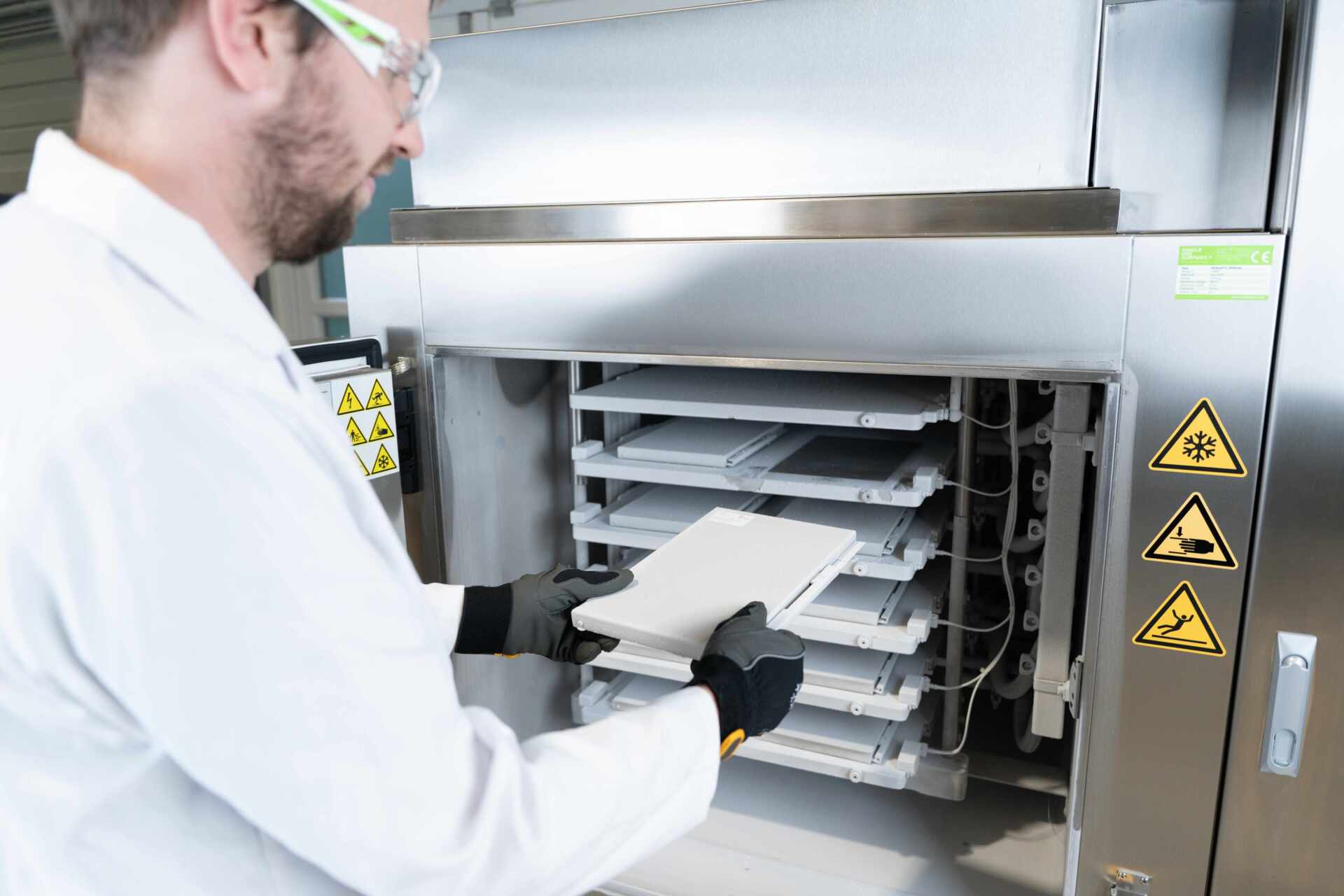
ATMPs (Advanced Therapy Medicinal Products, like cell and gene therapies) often come in tiny volumes, degrade easily, and can’t be “remade” if something goes wrong, so the final steps can decide whether a patient dose survives.
Why it matters: For ATMPs, fill & freeze isn’t just a packaging step. It’s a product-quality step: each transfer, connection, or temperature slip can mean lost potency, contamination risk, or wasted doses.
The challenge: Unlike traditional biologics, which are produced in large batches where noticeable losses do not typically carry much weight overall, many ATMPs are produced in small, sometimes patient-specific, batches. Here, a lost batch carries much greater risk, potentially becoming existential.
Big picture: The industry is moving toward workflows that reduce risk across the “last mile” of manufacturing, because cold-chain mistakes and manual handling don’t scale.
Zoom in: The two recurring failure modes are: Too many open/manual steps (more variability + higher contamination risk) and cold-chain stress (excursions, inconsistent freezing, complex handoffs between sites).
Single Use Support builds around a simple principle: keep the process closed and controlled, with integrated small-volume fluid and cold-chain management designed to support filling & freezing, then storage and shipping.
SNIPPETS
What’s happening in biotech today?
🔄 ChemR23 comeback: AbbVie has revised its partnership with Ose Immunotherapeutics, returning responsibility for the preclinical and phase 1 development of the chronic inflammation drug ABBV-230 (formerly OSE-230) to the French biotech. Initially licensed by AbbVie in 2024 for $48 million, the drug targets the ChemR23 receptor to modulate immune response and resolve inflammation. Under the updated agreement, Ose will fund and lead the early-stage development, contingent on securing sufficient financing, while AbbVie retains rights to advance and commercialize the asset after phase 1. Although Ose forfeits a milestone payment tied to trial initiation, the overall milestone potential of up to $665 million remains intact.
🌍 Efti export: Dr. Reddy’s Laboratories has entered a licensing deal with Immutep, paying $20 million upfront for exclusive rights to the phase 3 immunotherapy eftilagimod alpha (efti) in selected markets outside North America, Europe, China, and Japan. The agreement includes up to $349.5 million in milestone payments and double-digit royalties, while Immutep retains global manufacturing rights. Efti, a LAG-3 fusion protein, has shown promising results in combination with Merck’s Keytruda, notably improving survival in head and neck cancer patients, and is currently being studied in non-small cell lung cancer.
🏃♂️ DMD dash: Dyne Therapeutics is preparing to seek FDA accelerated approval in 2026 for its Duchenne muscular dystrophy (DMD) candidate z-rostudirsen, following promising results from a phase 1/2 trial in patients amenable to exon 51 skipping. In the study’s registrational cohort, patients treated with the drug every four weeks showed a significant increase in muscle-content adjusted dystrophin expression, reaching 5.46% of normal levels, much higher than the 0.3% seen in trials for Sarepta’s approved drug Exondys 51. Dyne also reported functional improvements and a favorable safety profile. A U.S. launch could occur in early 2027.
⚔️ Dermatitis duel: Kymera Therapeutics' shares surged nearly 33% following positive Phase Ib results for its oral STAT6 degrader KT-621 in patients with atopic dermatitis. The BroADen study showed robust STAT6 protein degradation, significant biomarker reductions, and clinical efficacy, measured by EASI scores, that matched or slightly surpassed Sanofi’s monoclonal antibody Dupixent at the 4-week mark. KT-621, administered once daily, demonstrated promising safety and potential impact on other Type 2 inflammatory diseases. Kymera’s CEO highlighted the results as a major validation of the company’s STAT6 program and its broader strategy to develop potent oral therapies with efficacy comparable to injectable biologics.
🚪Exit flex: Galapagos reported strong Phase II results for its CAR T-cell therapy candidate GLPG5101 in relapsed or refractory mantle cell lymphoma, even as the company continues to wind down its cell therapy operations. Presented at the American Society of Hematology meeting, the study showed a 100% objective response rate and a 96% complete response rate among 24 treated patients, with an 83% duration of response and progression-free survival at a median follow-up of nine months. Safety remained manageable, with no high-grade cytokine release syndrome and only one severe neurotoxicity case.
SNAPSHOT
BioNTech’s CTLA-4 drug shows strong survival gains, with big safety trade-offs

BioNTech and OncoC4’s CTLA-4 antibody, gotistobart, doubled survival rates in phase 3 NSCLC patients, but 60% faced immune-related side effects.
Why it matters: The drug offers a significant survival benefit for hard-to-treat lung cancer patients, yet its safety profile may limit broader use or patient tolerance.
Backstory: CTLA-4 therapies like BMS’s Yervoy are effective but notoriously tough on patients. OncoC4 licensed gotistobart to BioNTech in 2023, aiming for a safer alternative using a pH-dependent design.
Big picture: This trial underscores the long-standing challenge in oncology: balancing treatment efficacy with manageable side effects. Despite safety issues, gotistobart’s survival data mark a potential win in the NSCLC space.
Zoom in: The lung cancer market, especially for second-line squamous NSCLC, remains an area of unmet need. The competitive landscape is tougher for gotistobart's use in other cancers, where trials are ongoing with Keytruda and Pluvicto combinations. This being said, Gotistobart did rather well with a 12-month overall survival of 63.1% (gotistobart) vs. 30.3% (docetaxel) despite the 42% rate of treatment-related adverse events.
What's next: Analysts remain optimistic despite tolerability concerns, calling the drug a “commercial opportunity.” The pivotal phase of the 500-patient study continues, with results expected by mid-2026. BioNTech is also testing gotistobart in ovarian and prostate cancers.
SPEED READ
More news
Xlife Sciences is divesting 12 biotech, medtech, and digital health projects to Grupo Landsteiner for $450 million in shares, forming a strategic global partnership.
Pan Cancer T raised €10 million to begin human trials of its T-cell therapy targeting triple-negative breast cancer, aiming to improve outcomes in hard-to-treat patients.
Vyome’s topical gel VT-1953 showed significant improvements in smell, pain, and quality of life for malignant fungating wounds, prompting plans for a pivotal FDA trial.
TOUR OPERATOR
Upcoming events
🇺🇸 San Francisco, 10 January 2026 - Sachs Annual Oncology Innovation Forum
🇬🇧 London, 19 January 2026 - Bioseed
🇩🇪 Heidelberg, 4 February 2026- Life, the biomedical convention
🇦🇪 Dubai, 9-12 February 2026, WHX Dubai
🇩🇪 Göttingen, 19 February 2026 - Life Science Start-up Day
🇬🇧 London, 24-25 February 2026 - World ADC London 2026
🇳🇱 Amsterdam, 3-4 March 2026 - BioCapital
🇪🇸 Barcelona, 10-12 March 2026 - Bioprocessing Summit Europe
🇳🇱 Utrecht, 26 March 2026 - Innovation for Health
🇦🇹 Vienna, 27-30 March 2026 - BioProcess International
What did you think of today's newsletter?Your feedback helps us create the best newsletter possible. |
Share the Snap!
Know someone who’d enjoy this? Hit forward and pass it along.