- Biotech Snap
- Posts
- 2. October 2025
2. October 2025

Joachim Eeckhout
October 02, 2025


Good morning! If you were planning to submit a drug application to the FDA in the coming days, you may be out of luck. Due to the ongoing U.S. government shutdown, the FDA has stopped accepting new drug and medical device submissions. Although the agency will retain 86% of its workforce, many “non-critical regulatory activities” are also being put on hold. Meanwhile, the agency faced fresh controversy when shares of biotech company Aurinia plunged after a senior FDA official briefly posted—and then deleted—comments on LinkedIn questioning the safety and benefits of its lupus nephritis drug, Lupkynis. This was despite the drug’s full approval and continued backing from both the company and industry analysts. Perhaps the FDA should fast-track an internal LinkedIn approval process.
Enjoy today’s read!
—Joachim E.
PS: tomorrow is a holiday here in Germany (reunification day 🎉), so the newsletter will be back on Monday. Have a nice weekend!
Don’t keep this newsletter a secret: Forward Biotech Snap to a friend!
Was this email forwarded to you? Sign up here.
SNAPSHOT
Irish startup Aerska launches with $21M to break brain barriers in gene therapy

Aerska, a Dublin-based biotech, launched with $21 million in seed funding to develop RNAi-based brain shuttles for treating neurological diseases like Alzheimer’s and Parkinson’s.
Why it matters: Crossing the blood-brain barrier is one of the biggest challenges in drug delivery. Aerska’s tech could enable targeted, long-lasting gene silencing in the brain; potentially transforming treatment options for devastating neurological conditions.
Backstory: The company, co-founded by Jack O’Meara (former CEO of Ochre Biotech) and Stuart Milstein, includes neuroscience and biotech veterans from AstraZeneca and Orfonyx Bio. Aerska´s platform combines antibody-oligonucleotide conjugates with receptor-mediated shuttling.
Big picture: Aerska joins a growing group of companies racing to overcome the blood-brain barrier, a key obstacle in CNS drug development. With major pharma like GSK and Denali Therapeutics also pursuing similar strategies, innovation in this space could redefine treatment across a wide range of brain diseases.
PRESENTED BY BIOIVT
Making sense of cell-based technologies: a deep dive
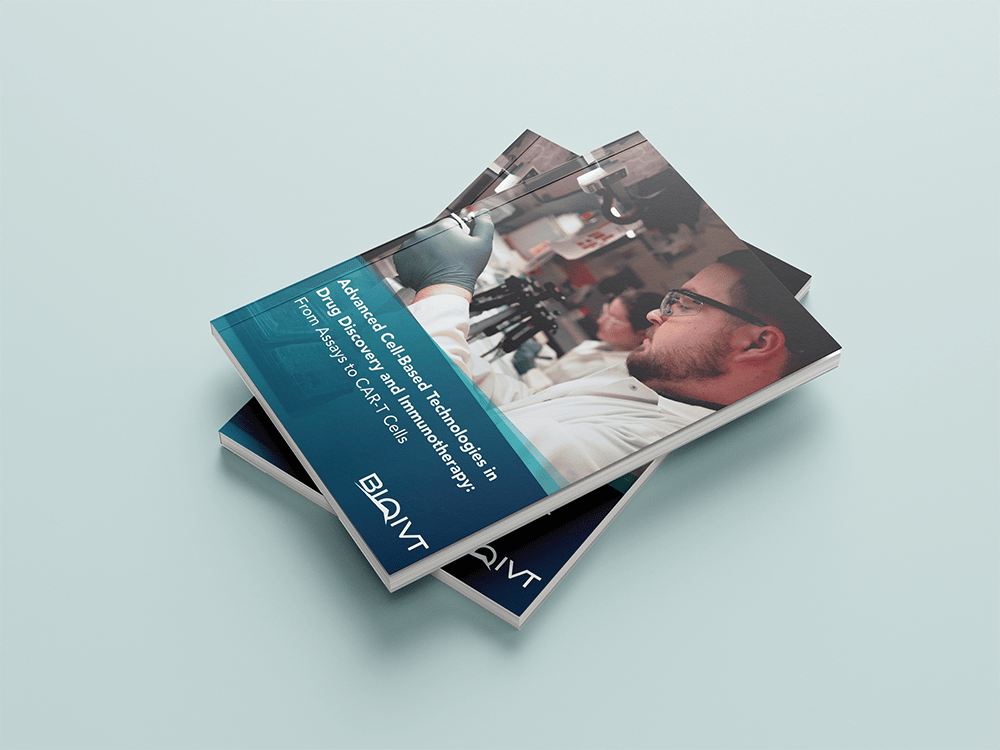
Cell-based biotech is both promising and complex. From the role of cell-based assays in drug discovery to the evolving landscape of CAR-T and tumor-infiltrating lymphocyte therapies, progress often raises as many questions as it answers.
A new eBook brings together key perspectives and examples that trace these developments, offering context on how researchers approach disease models, controls, and next-gen sequencing. For those tracking the science, it’s a clear-eyed look at where the field is now and where it could go next.
SNIPPETS
What’s happening in biotech today?
💊 Lupus bet: Kyorin Pharmaceutical has signed a $105 million licensing deal with Hinge Bio for the Japanese rights to HB2198, a preclinical lupus drug targeting CD19 and CD20 for B-cell depletion. Kyorin will pay $10 million upfront, with up to $95 million in development milestones related to systemic lupus erythematosus, and may make further payments if the drug is explored for other autoimmune conditions.
👁️AMD ambitions: French biotech company SeaBeLife has secured €2 million in a pre-Series A funding round to advance its development of first-in-class drug candidates targeting necroptosis and ferroptosis, two key pathways of regulated cell death, with a focus on treating dry age-related macular degeneration (AMD) and severe acute hepatitis. Backed by existing and new investors, the funding will support progression toward clinical trials, expected to begin in 2026. Founded in 2019, SeaBeLife aims to address unmet medical needs with its dual-inhibition approach, supported by promising preclinical results and €9 million raised to date.
💰Another launch: Athernal Bio, a Cambridge-based biotech company, has launched with £3.5M ($4.7M) in funding from Delin Ventures to develop targeted immunotherapies for high-risk clonal haematopoiesis (CH), a common precursor to blood cancers such as acute myeloid leukaemia. The funding will support in vivo validation and preclinical milestones toward clinical trials, with a focus on stopping cancer before it starts.
🪓Pipeline cut: Takeda is exiting the cell therapy space as part of a strategic portfolio shift, narrowing its focus to small molecules, biologics, and antibody-drug conjugates. The Japanese drugmaker is seeking a partner to take over its cell therapy platform and preclinical programs, including the gamma delta T-cell therapy platform acquired from GammaDelta Therapeutics in 2021, which contributed to an expected impairment loss of approximately $394 million. With no current cell therapy assets in clinical trials, Takeda plans to redirect investment toward areas promising faster, large-scale impact. This move aligns with broader industry trends, as several major pharma companies have recently scaled back or abandoned cell therapy ventures.
🧪Isotope hustle: Full-Life Technologies, a China-Belgium biotech firm, has secured $77 million in funding, $50 million in Series C equity, and $27 million in debt, to advance its radiopharmaceutical pipeline and complete construction of its manufacturing facility in Gembloux, Belgium. This brings the company’s total funding since its 2021 launch to nearly $200 million.
SNAP AGAIN
Novartis wins FDA nod for Rhapsido, a first-in-class oral treatment for chronic hives

The FDA approved Novartis’ remibrutinib (brand name Rhapsido) as an oral therapy for adults with chronic spontaneous urticaria (CSU, or chronic hives) who don’t respond to antihistamines.
Why it matters: Rhapsido could reshape treatment for nearly 400,000 U.S. patients with moderate to severe CSU, offering a convenient pill instead of injectables like Xolair or Dupixent. With limited existing options, Novartis is targeting a multibillion-dollar market and positioning itself against Sanofi in the race to expand Bruton’s tyrosine kinase (BTK) inhibitors beyond cancer.
Backstory: CSU is a debilitating immune condition marked by unpredictable itching and hives. Novartis’ Rhapsido, a BTK inhibitor, combats CSU by blocking histamine release and autoantibody production. While both Novartis and Roche have marketed their own drug, Xolair, since 2014, injection delivery and safety warnings have limited its acceptance.
Zoom in: Rhapsido´s safety profile requires no lab monitoring, making it easier for dermatologists to prescribe and showed a lot of promise in clinical trials. In phase 3 trials (Remix-1, Remix-2), Rhapsido significantly reduced hives and itching, with nearly half of patients symptom-free at one year.
Big picture: The approval kicks off competition between Novartis and Sanofi in immunology BTK inhibitors, as Sanofi’s own BTK inhibitor, Wayrilz, recently won approval in immune thrombocytopenia and is advancing in CSU and other immune diseases. Both are pursuing a wide range of immune and allergic diseases, aiming to carve out leadership as biologics like Cosentyx face looming patent cliffs.
What’s next: Novartis plans pivotal readouts in 2026 for other conditions like chronic inducible urticaria and multiple sclerosis, while exploring food allergy, a potential 20M-patient market.
SPEED READ
More news
Halozyme will acquire drug delivery firm Elektrofi for up to $900 million to integrate its Hypercon platform, enabling more concentrated, lower-volume subcutaneous biologic injections.
Rezon Bio launches as a cost-efficient European CDMO, offering end-to-end biologics manufacturing with digitally optimized, regulatory-compliant facilities, as a result of a Polpharma Biologics demerger.
Bristol Myers Squibb, Takeda, and Astex have joined a federated AI initiative to pool structural data for advancing secure, collaborative drug discovery without compromising proprietary information.
Klotho Neurosciences plans to acquire Turn Biotechnologies' rejuvenation platforms ERA and eTurna in a deal supporting regenerative therapies and a $300M Korean partnership.
TOUR OPERATOR
Upcoming events
🇨🇭Basel, 8-9 October 2025 - 25th Annual Biotech in Europe Forum
🇳🇱 Amsterdam, 11-14 October 2025 - ENCP Congress
🇩🇪 Berlin, 17-21 October 2025 - ESMO Congress
🇳🇱 Amsterdam, 27-30 October 2025 - World Orphan Drug Congress
🇩🇪 Frankfurt, 28-30 October 2025 - CPHI
🇦🇹 Vienna, 3-5 November 2025 - BIO-Europe 2025
🇺🇸 Boston, 13-14 November, 2025 - Pharma Partnering Summit
🇦🇪 Dubai, 17-18 November, 2025 - World Biotechnology and Bioengineering Congress
🇫🇷 Paris, 24-25 November, 2025 - 2nd International Congress on Virology, Emerging Diseases and Vaccines
🇧🇪 Brussels, 4-5 December, 2025 - BIOVERSE Europe 2025
What did you think of today's newsletter?Your feedback helps us create the best newsletter possible. |
Share the Snap!
Know someone who’d enjoy this? Hit forward and pass it along.